Product transportation
Our innovative double-decker trucks can carry 60% more freight than conventional trucks. For the transport of products from DCs to stores, diesel will be phased out over time. We consider electric transport as the long-term solution for transportation. These technologies are, however, not yet available at a sufficient scale. We are therefore considering intermediate solutions for the coming years.
We intend to roll-out the use of HVO to a substantial part of our fleet operating from the Netherlands. This alternative fuel made of waste resources generates up to 90% lower CO2 emissions compared to diesel. We will also invest in two electric trucks to assess the possibilities and implications of the electrification of our (entire) truck fleet.
In 2021, the average distance between a store and DC was 189 km, 4.5% lower than in 2020. We will continue to accomplish shorter average distances by further expanding our logistics network with new DCs or hubs every year.
Managing our waste streams
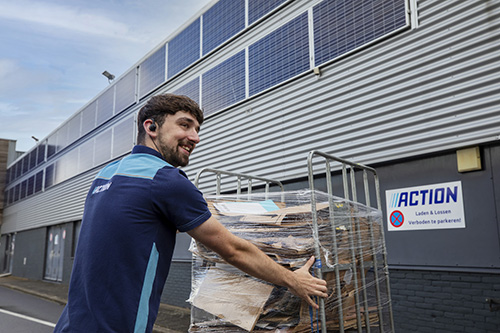
Cardboard and plastic are collected in the stores and distribution centres and recycled. At our distribution centres, we compress the volume of cardboard and plastic before it is passed on to recycling facilities. By reducing the volume, we can transport these materials more efficiently, which helps minimise CO2 emissions. The compressed bales also comply with the recycling facilities’ standard way of working, so no extra handling is required.
We prevent plastic use by only stretch wrapping the upper part of the roll containers, saving an estimated 30% in plastics compared to fully wrapping each container. We also process damaged and returned products, primarily to avoid these products becoming waste. Other waste streams are separated so they can be recycled or processed separately. We also reuse and recycle our store materials and provide our customers with an organised way to dispose of batteries, light bulbs and small electrical appliances. We do this in partnership with local partners and initiatives such as Intesia in Austria, the Czech Republic, France, Germany, Italy, Poland and Spain; GP Groot, Stichting Open and Stibat in the Netherlands and Cebat in Belgium.